Description:
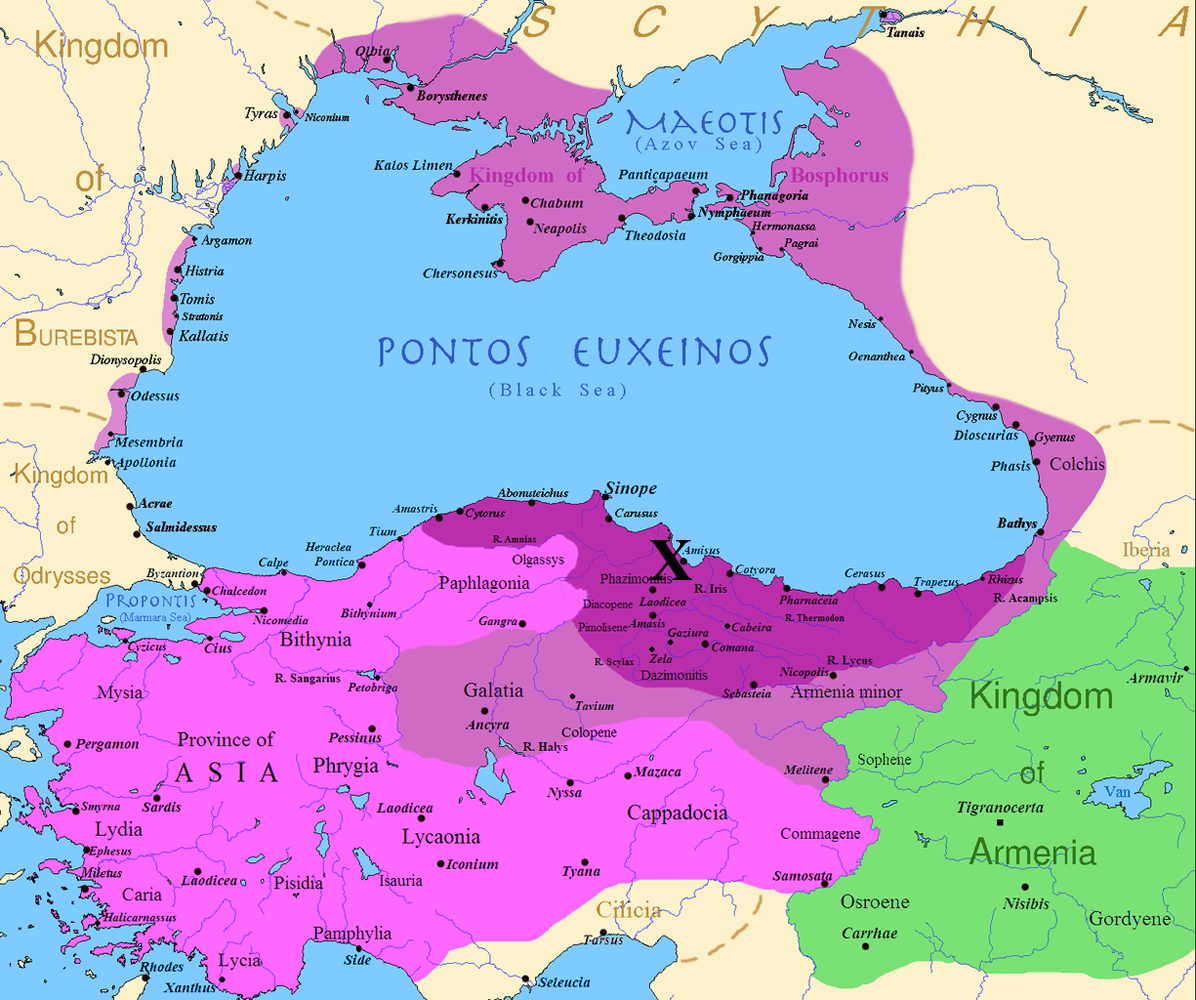
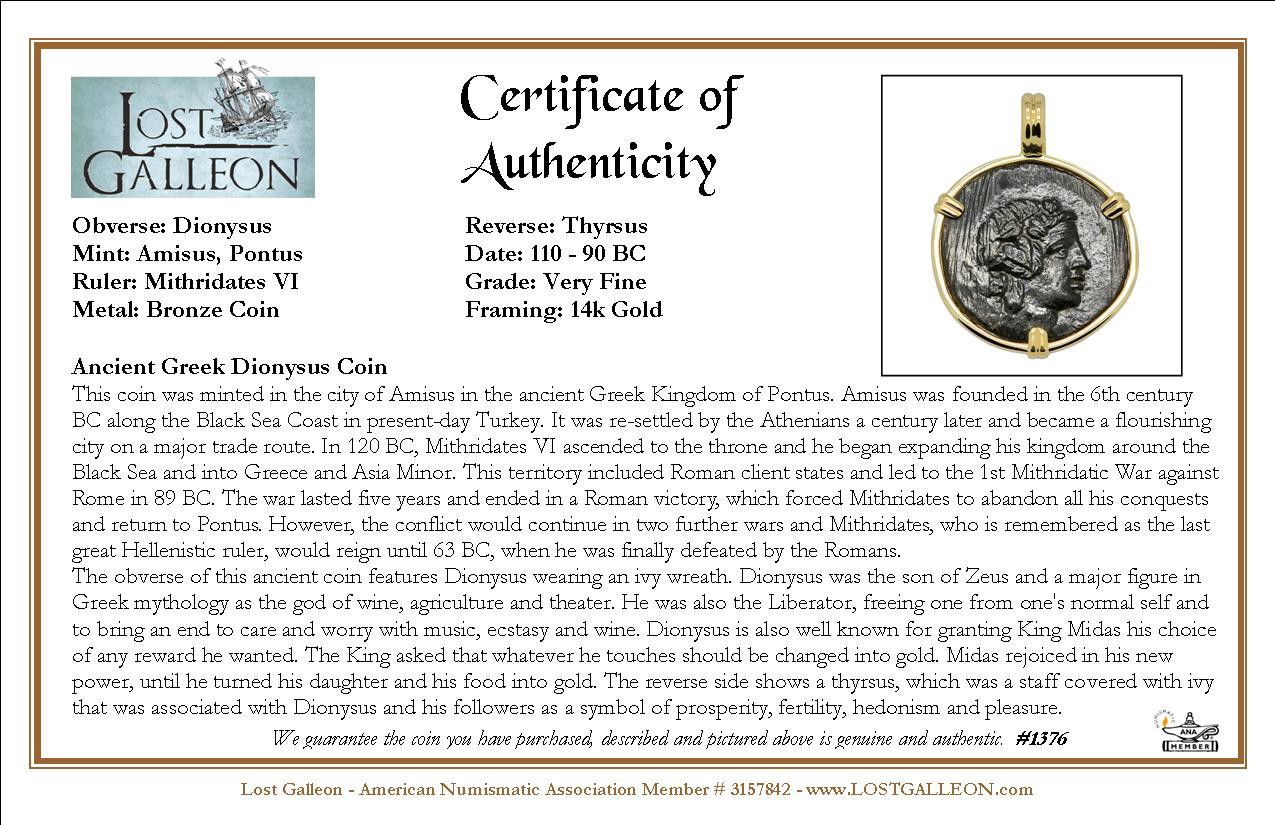
This coin was minted in the city of Amisus in the ancient Greek Kingdom of Pontus. Amisus was founded in the 6th century BC along the Black Sea Coast in present-day Turkey. It was re-settled by the Athenians a century later and became a flourishing city on a major trade route. In 120 BC, Mithridates VI ascended to the throne and he began expanding his kingdom around the Black Sea and into Greece and Asia Minor. This territory included Roman client states and led to the 1st Mithridatic War against Rome in 89 BC. The war lasted five years and ended in a Roman victory, which forced Mithridates to abandon all his conquests and return to Pontus. However, the conflict would continue in two further wars and Mithridates, who is remembered as the last great Hellenistic ruler, would reign until 63 BC, when he was finally defeated by the Romans.
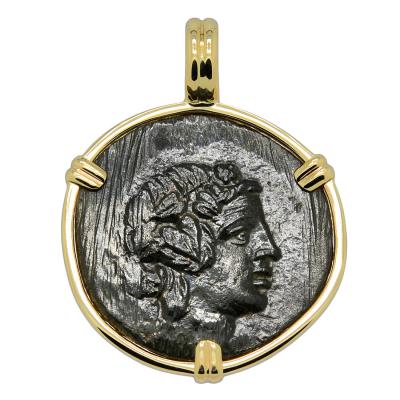
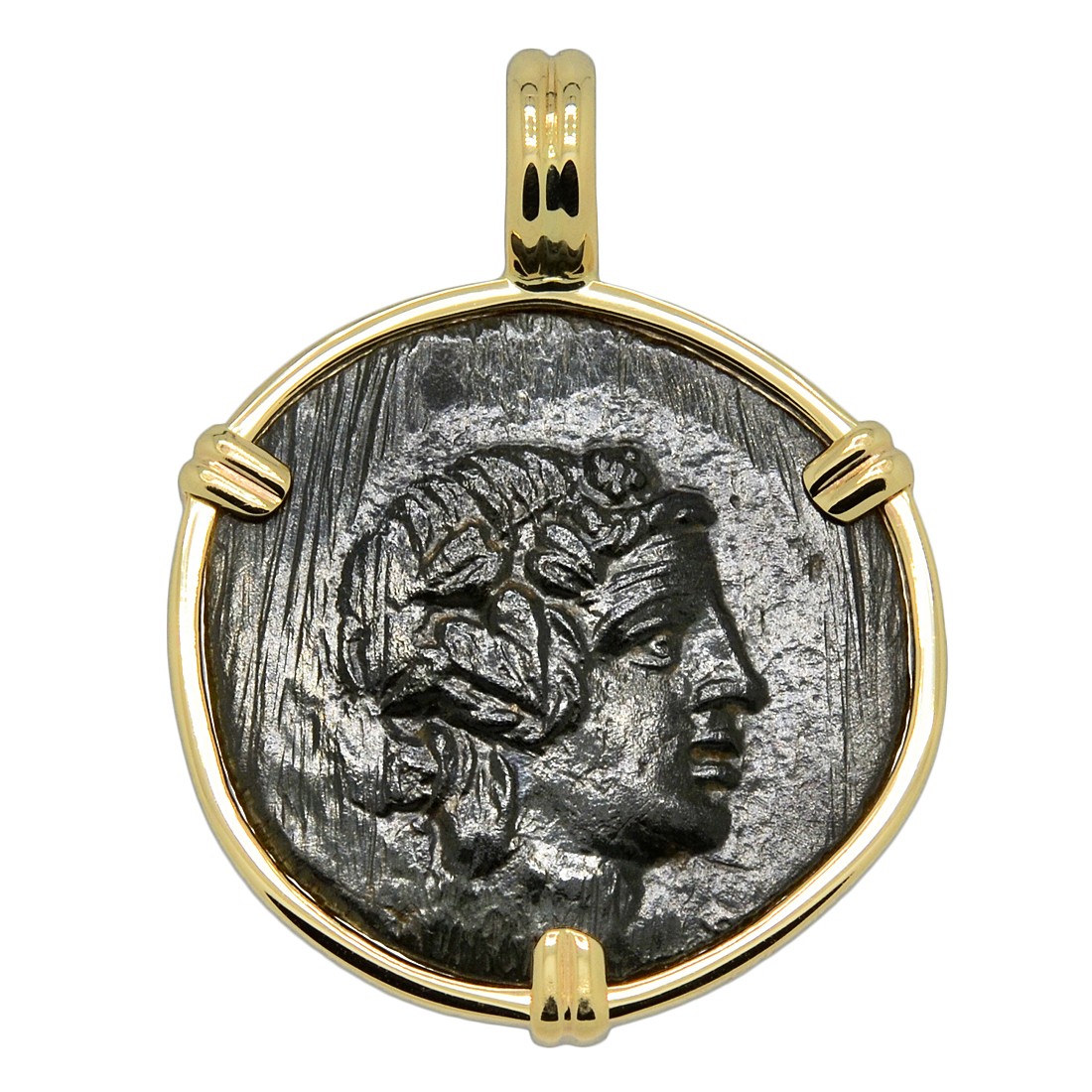
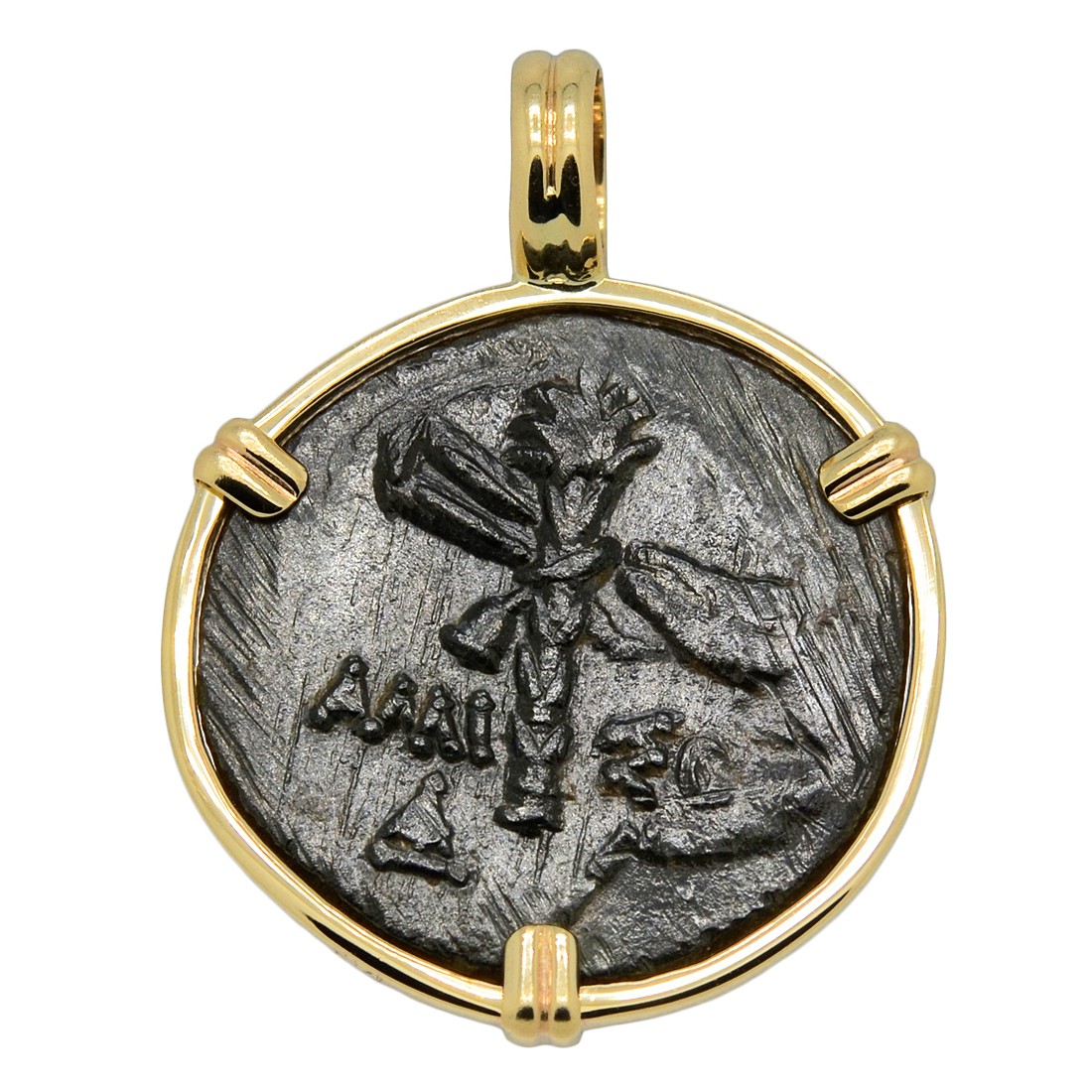
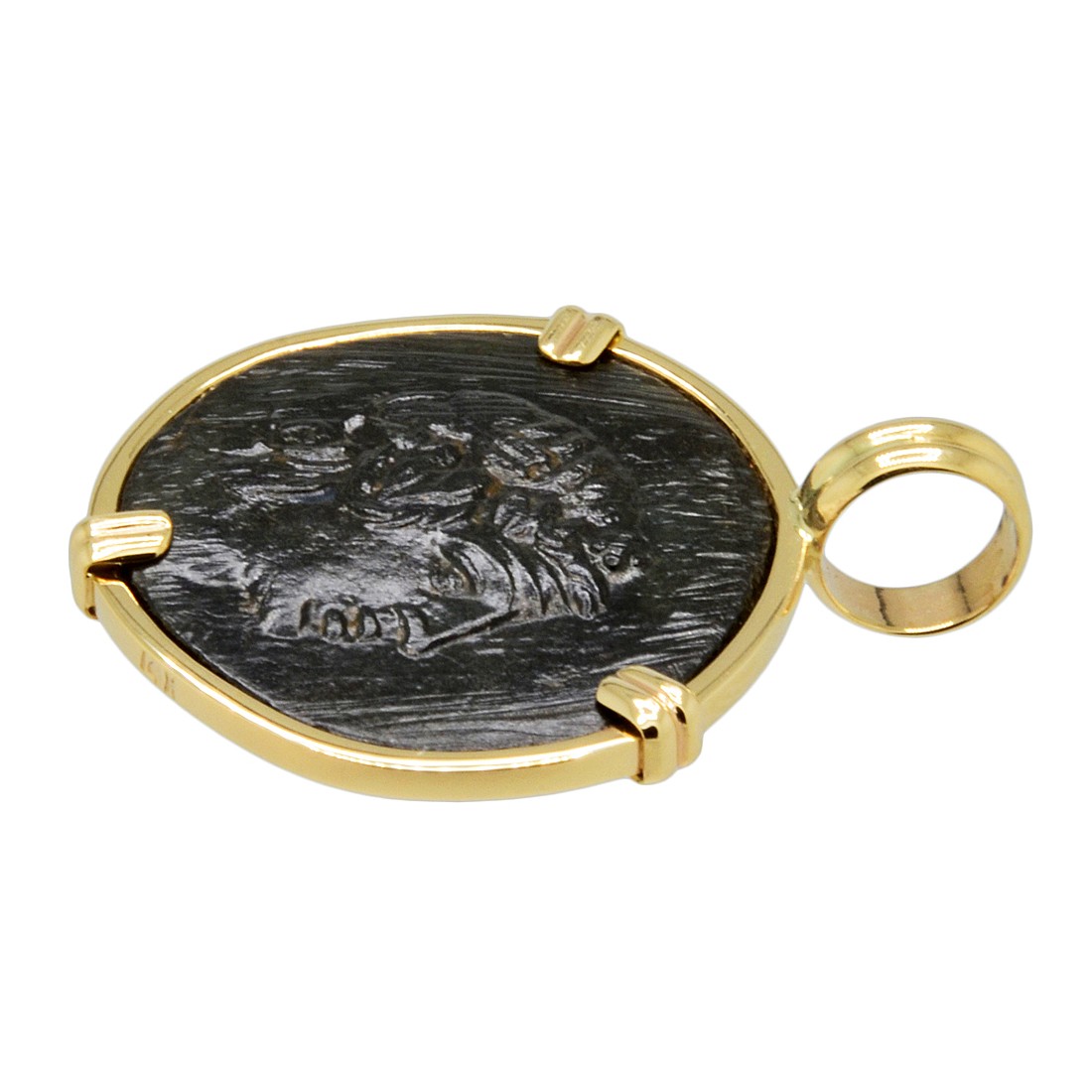
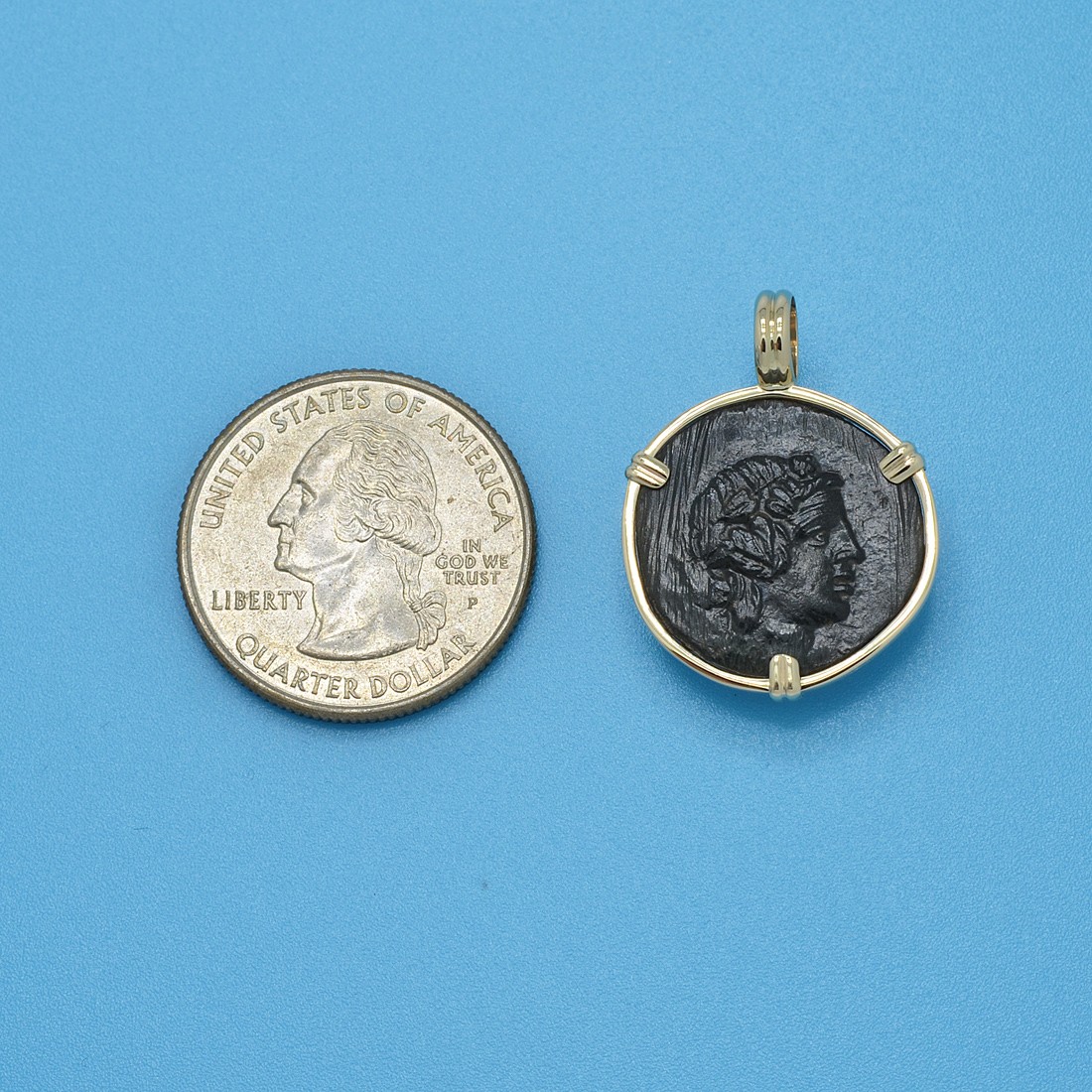
The obverse of this ancient coin features Dionysus wearing an ivy wreath. Dionysus was the son of Zeus and a major figure in Greek mythology as the god of wine, agriculture and theater. He was also the Liberator, freeing one from one's normal self and to bring an end to care and worry with music, ecstasy and wine. Dionysus is also well known for granting King Midas his choice of any reward he wanted. The King asked that whatever he touches should be changed into gold. Midas rejoiced in his new power, until he turned his daughter and his food into gold. The reverse side shows a thyrsus, which was a staff covered with ivy that was associated with Dionysus and his followers as a symbol of prosperity, fertility, hedonism and pleasure.