Description:
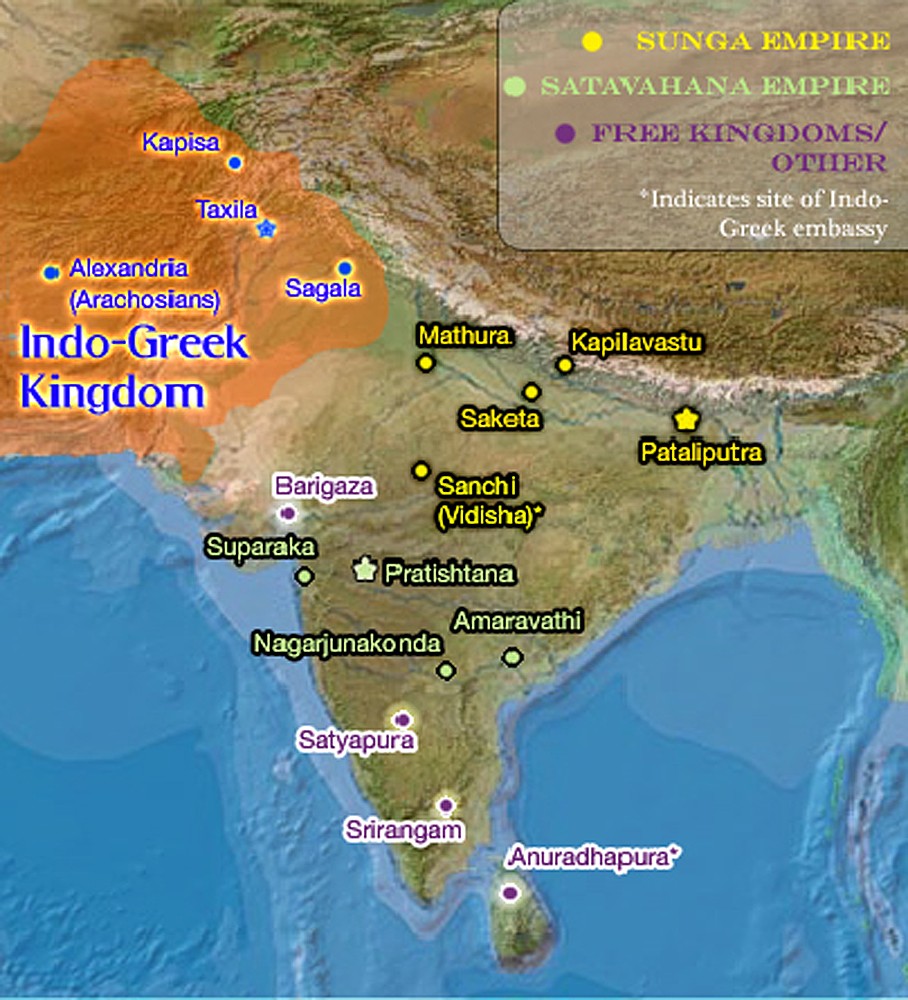
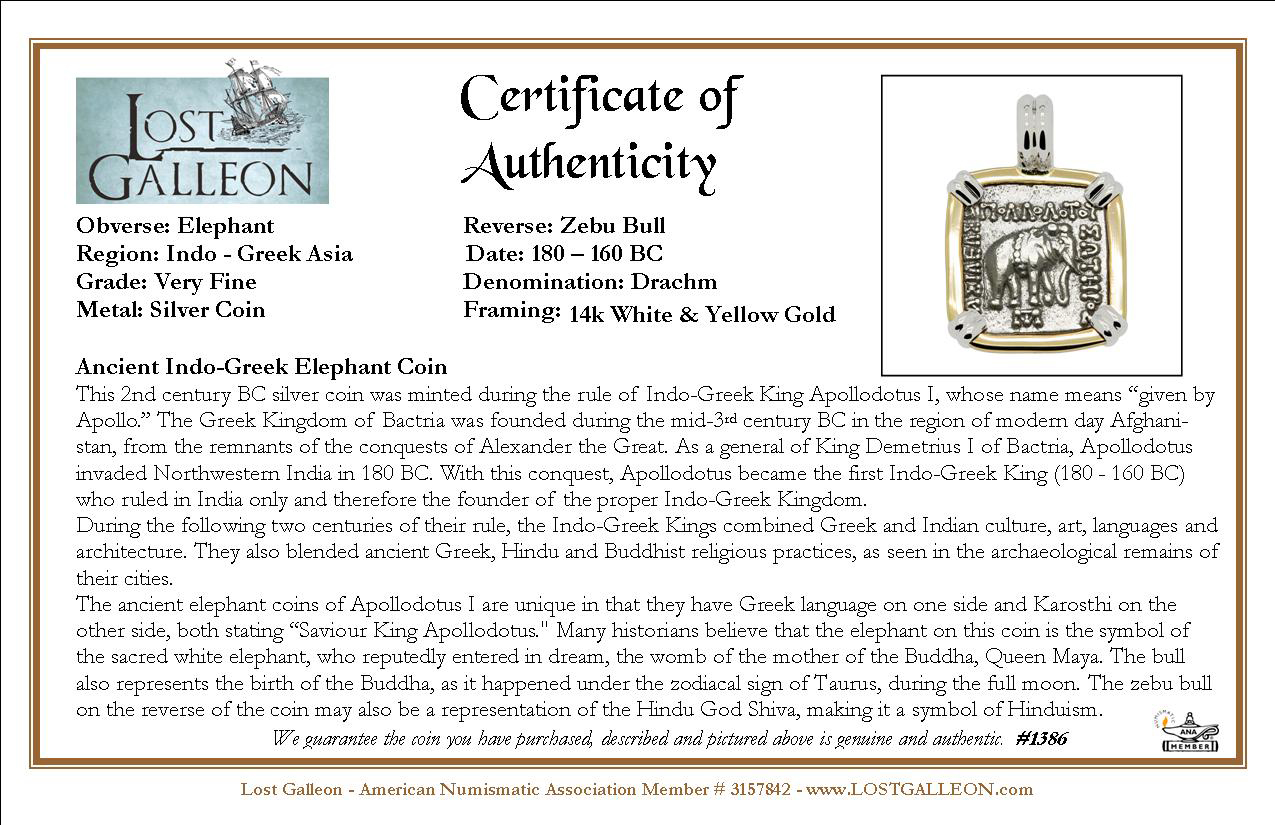
This 2nd century BC silver coin was minted during the rule of Indo-Greek King Apollodotus I, whose name means “given by Apollo.” The Greek Kingdom of Bactria was founded during the mid-3rd century BC in the region of modern day Afghanistan, from the remnants of the conquests of Alexander the Great. As a general of King Demetrius I of Bactria, Apollodotus invaded Northwestern India in 180 BC. With this conquest, Apollodotus became the first Indo-Greek King (180 - 160 BC) who ruled in India only and therefore the founder of the proper Indo-Greek Kingdom.
During the following two centuries of their rule, the Indo-Greek Kings combined Greek and Indian culture, art, languages and architecture. They also blended ancient Greek, Hindu and Buddhist religious practices, as seen in the archaeological remains of their cities.
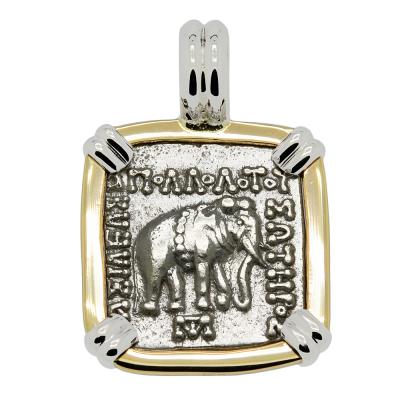
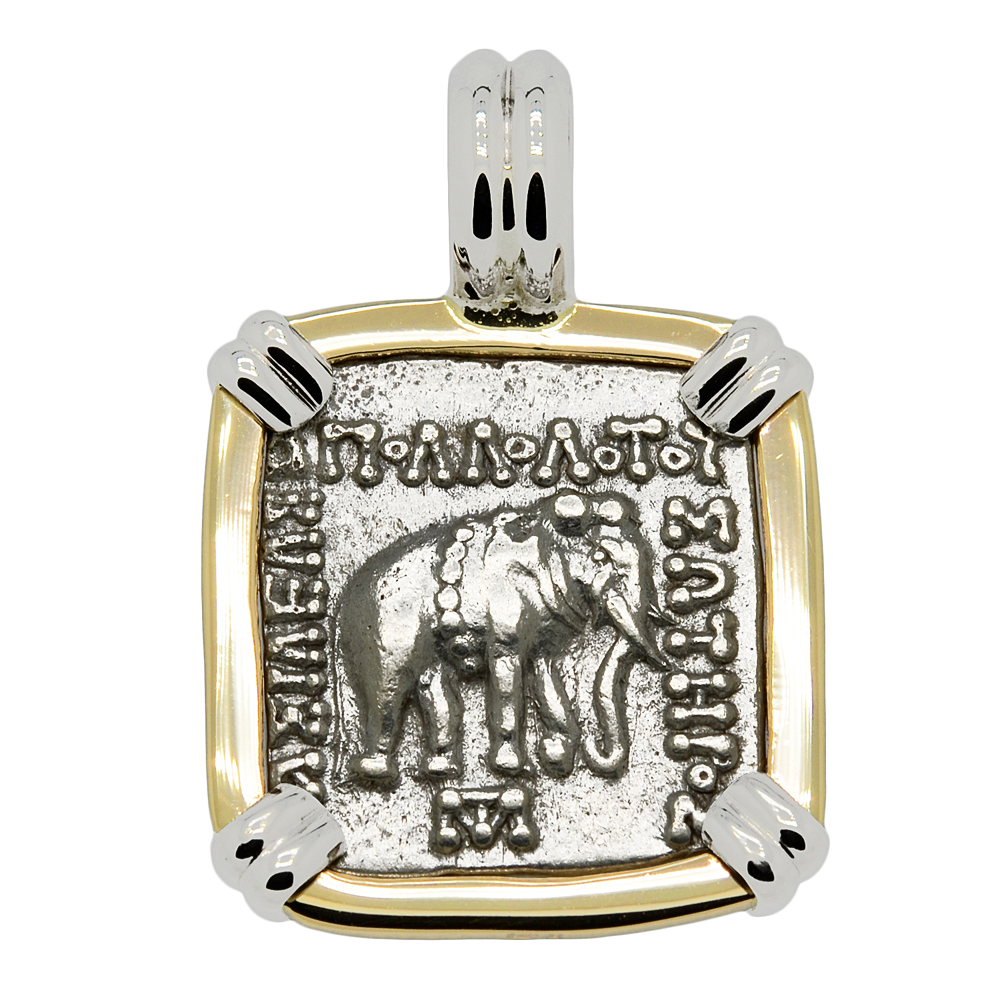
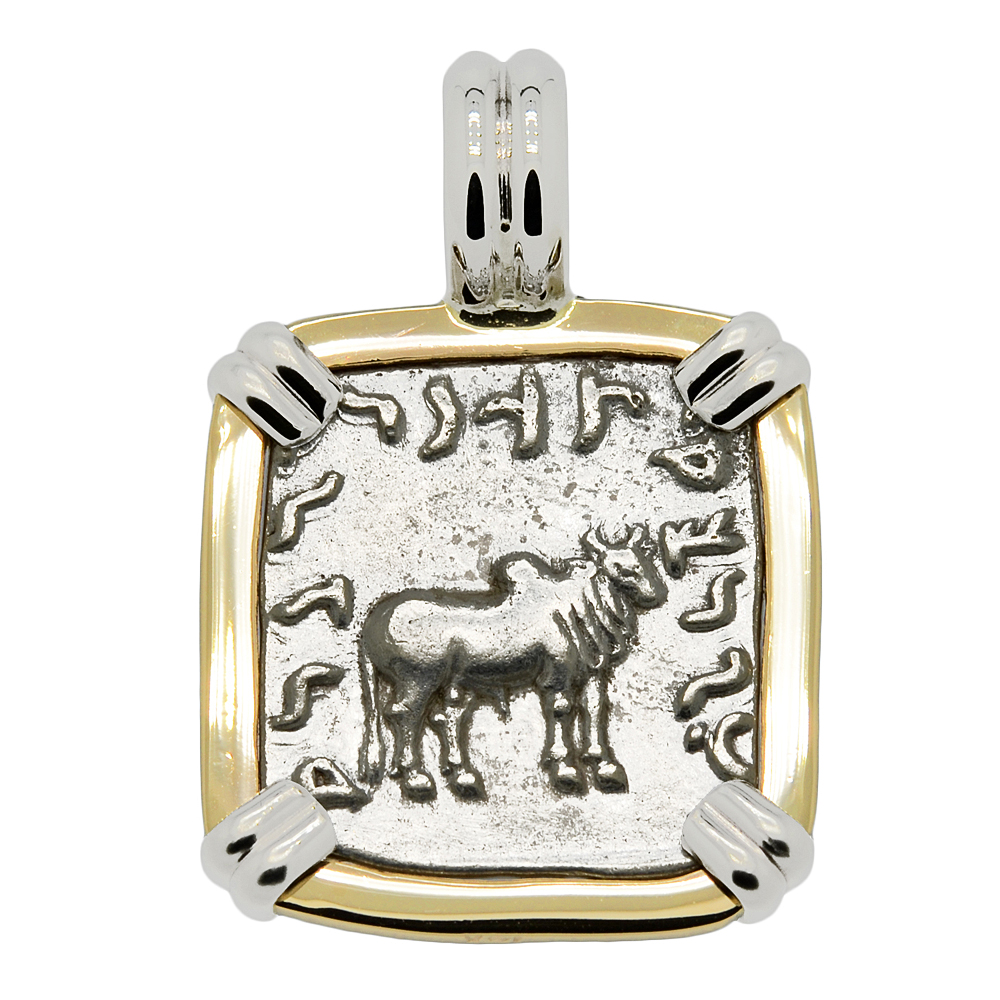
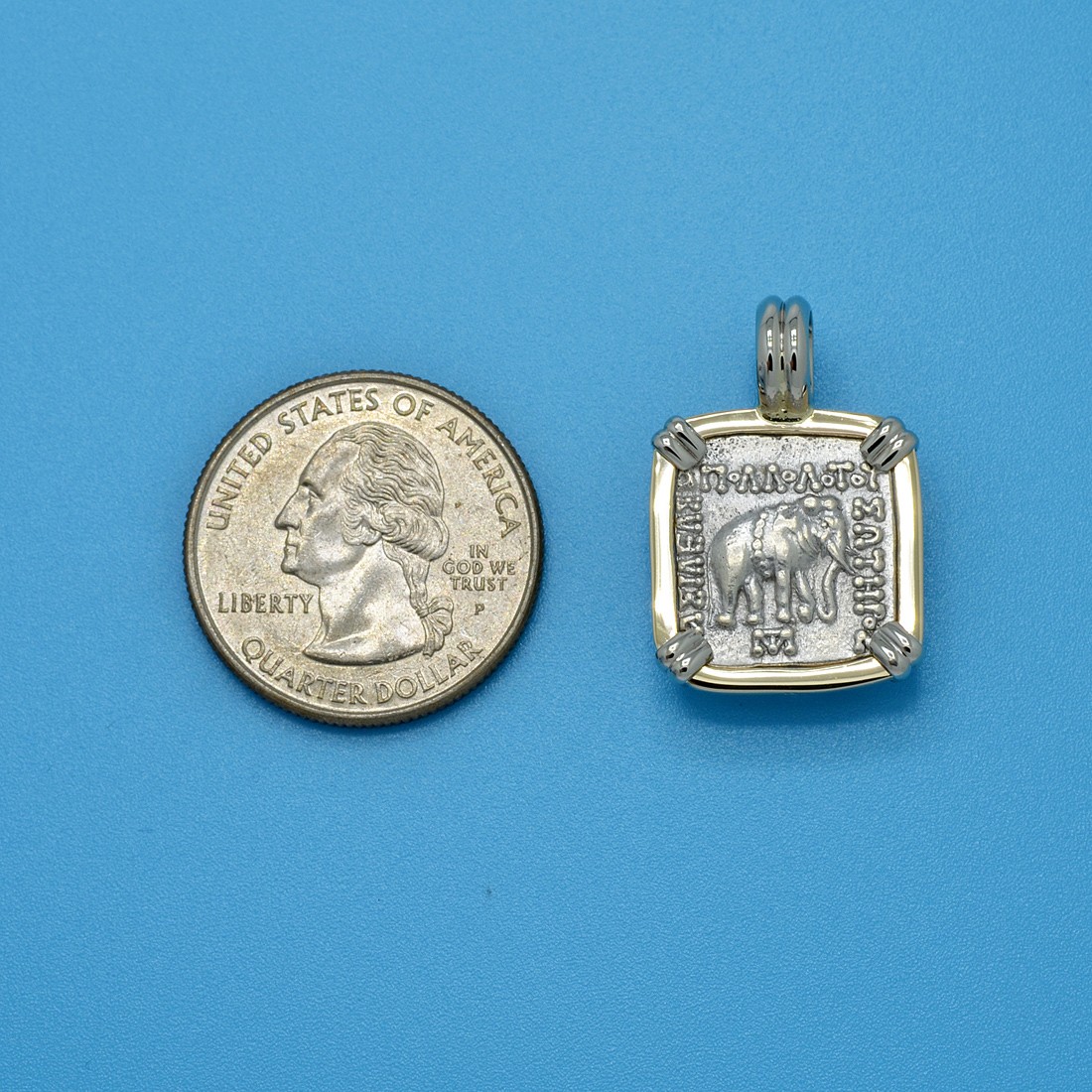
The ancient elephant coins of Apollodotus I are unique in that they have Greek language on one side and Karosthi on the other side, both stating “Saviour King Apollodotus." Many historians believe that the elephant on this coin is the symbol of the sacred white elephant, who reputedly entered in dream, the womb of the mother of the Buddha, Queen Maya. The bull also represents the birth of the Buddha, as it happened under the zodiacal sign of Taurus, during the full moon. The zebu bull on the reverse of the coin may also be a representation of the Hindu God Shiva, making it a symbol of Hinduism.